Bone Grafting
Building a Strong Foundation for Lasting Smiles
Bone Grafting
Building a Strong Foundation for Lasting Smiles
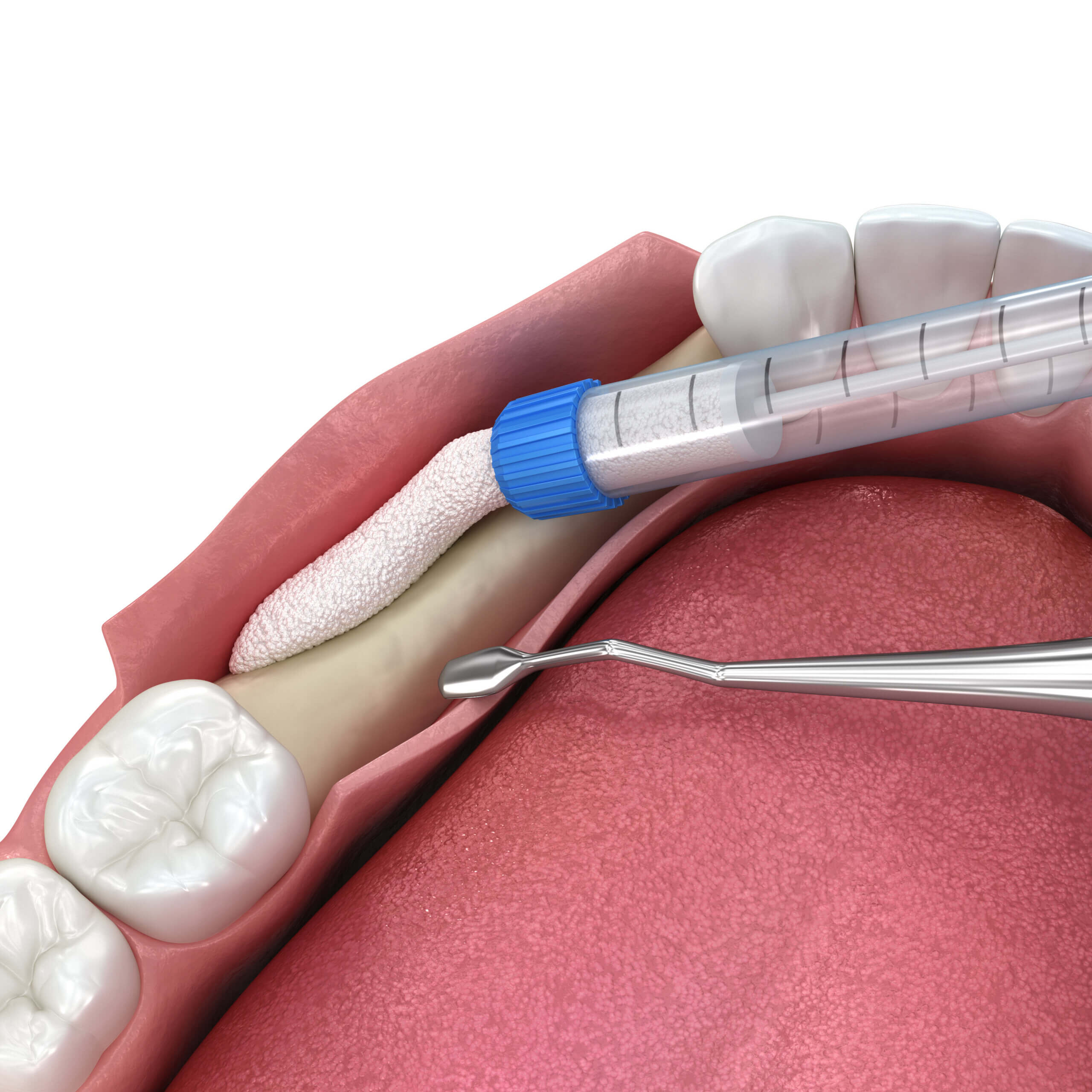
What Is Bone Grafting?
Grafting materials may come from your own body, a donor source, or advanced biocompatible substitutes. In complex cases we may use growth factors along with bone graft to improve the quality and quantity of bone that is formed. Over time, your body replaces the graft with your natural bone, creating long-term stability.
When Is Bone Grafting Needed?
You may benefit from bone grafting if you:
- Have experienced bone loss after tooth loss or gum disease
- Wish to receive dental implants but lack enough bone support
- Need sinus lift surgery to prepare the upper jaw for implants
- Have facial trauma or congenital conditions affecting jaw structure
Bone grafting is often performed before or alongside dental implant surgery to maximize long-term dental implant success.
Types of Bone Grafting Procedures
- Socket Preservation – A graft placed immediately after a tooth extraction to maintain bone height and width for future implants or bridges
- Sinus Lift – Adds bone beneath the sinus floor to support implants in the upper back jaw.
- Ridge Augmentation – Rebuilds the jaw when bone has resorbed, restoring natural contour and strength.
After careful evaluation our board-certified surgeons will recommend the approach that best suits your needs at your consultation appointment.
Adjuncts to Bone Grafting: Platelet Rich Fibrin and Growth Factors
In addition to traditional grafting techniques, we enhance healing and bone regeneration with advanced biologic materials.
- Platelet-Rich Fibrin (PRF): Using a small sample of your own blood, we isolate platelets and growth factors that are then placed at the surgical site. PRF stimulates natural healing, reduces inflammation, and improves graft integration—all without synthetic additives.
- Growth Factors (e.g., Gem 21S®): These biologic agents supply the proteins and signals your body needs to form new bone. When combined with graft material, they help speed bone regeneration and improve the quality and quantity of grafted bone.
By incorporating PRF and growth factors into bone grafting procedures, we can provide patients with faster recovery, more predictable results, and stronger support for future implants.
The right choice for anesthesia depends on both your level of anxiety and the complexity of your procedure.
Local anesthesia
- Local anesthesia numbs only the area being treated, so you remain fully awake and aware throughout the procedure. It’s fast, effective, and ideal for patients who have no anxiety about the planned procedure. Most patients experience only mild pressure without pain.
Nitrous Oxide
- Also known as laughing gas, this inhaled gas relieves anxiety and helps you feel more relaxed. You remain awake and responsive, and the effects wear off quickly once discontinued. It is useful for patients with mild dental anxiety.
Sedation
- IV sedation, also known as deep sedation, is the best option for patients who want to be deeply relaxed and comfortable. During sedation you breathe on your own the entire time – there is no breathing machine or invasive airway. Other than anesthesiologists, our board certified oral and facial surgeons are the only medical providers qualified to sedate patients at this level. Many patients remember little to nothing about the procedure, making it an excellent option for wisdom teeth removal, dental implants, or longer surgeries. You’ll be carefully monitored at all times to ensure safety. A designated driver is required to take you home after the procedure.
Frequently Asked Questions for Full Arch Restoration
Is bone grafting painful?
How long does it take for a bone graft to heal?
What materials are used for bone grafting?
Can bone grafting and dental implants be done at the same time?
Who is a good candidate for bone grafting?
Why Choose Us for Bone Grafting?
Highly trained oral surgeons with years of experience
State-of-the-art technology and materials for predictable results
Personalized treatment plans designed to restore function and aesthetics
Our surgeons combine advanced training with years of experience performing bone grafting procedures of all types. With 3D imaging, minimally invasive techniques, and a focus on patient comfort, we create reliable outcomes that restore both function and appearance.