Dental Implants

Restore Your Smile and Confidence

Missing teeth affect more than just your appearance—they can change the way you chew, speak, and even how confident you feel when smiling. At NorthShore Center for Oral and Facial Surgery, our board-certified oral surgeons are experts at helping patients restore their smiles with long-lasting, natural-looking dental implants.

Dental implants are designed to look, feel, and function like your own teeth. Whether you are missing a single tooth, multiple teeth, or an entire arch, implants can restore function and help you smile with confidence!
Dental Implants

Restore Your Smile and Confidence

Missing teeth affect more than just your appearance—they can change the way you chew, speak, and even how confident you feel when smiling. At NorthShore Center for Oral and Facial Surgery, our board-certified oral surgeons are experts at helping patients restore their smiles with long-lasting, natural-looking dental implants.

Dental implants are designed to look, feel, and function like your own teeth. Whether you are missing a single tooth, multiple teeth, or an entire arch, implants can restore function and help you smile with confidence!

What are Dental Implants?

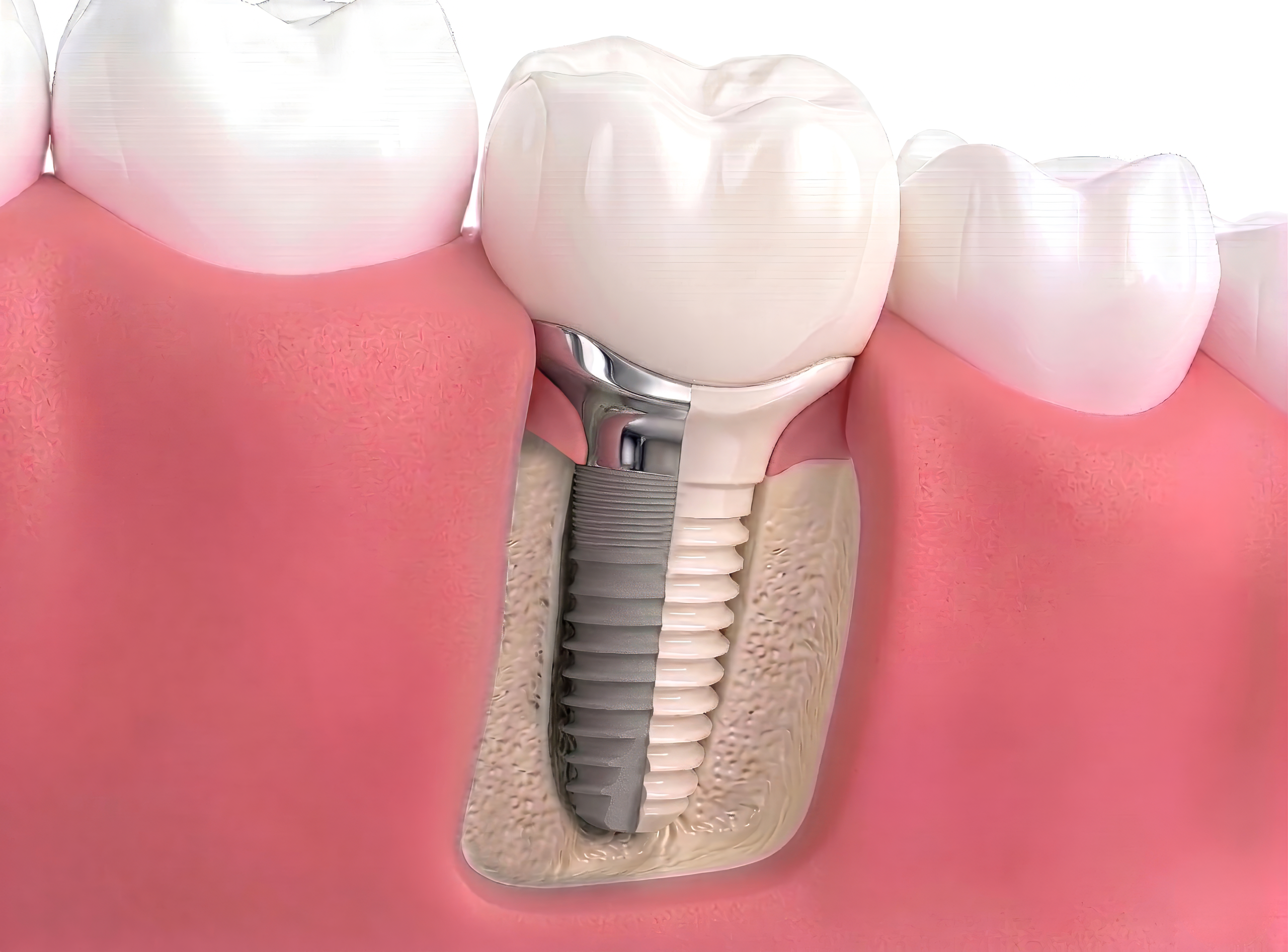
A dental implant is a small, biocompatible titanium or ceramic post that replaces the root of a missing tooth. Once placed into the jawbone, the implant fuses naturally with bone through a process called osseointegration. Your dentist will then make a natural-appearing crown or bridge which screws into the implant.

Unlike dentures or partials which result in loss of bone structure, implants preserve bone structure and prevent the sunken appearance that often comes with tooth loss. With proper care, implants can last for a lifetime.

Whether you are replacing one tooth or considering full-mouth implant solutions, our team customizes your treatment plan to meet your unique needs.

The Biggest Benefits of Dental Implants

Improved Appearance and Self-Esteem

With a complete smile, you can feel like yourself again and regain your confidence!

Convenient and Easy Care

Keeping your dental implant clean and healthy is easy – brush and floss your replacement tooth or teeth just like your other teeth!

Durability and Longevity

Dental implants are very strong and cannot decay like natural teeth. Unlike dentures and partials, dental implants help preserve your natural bone. With proper care, a dental implant can last a lifetime.

Comfort and Precision Care

Your comfort is our top priority. When removing teeth and placing dental implants we offer both nitrous oxide and sedation to make the procedure stress-free and comfortable. Afterwards our team provides detailed post-operative guidance to ensure a smooth recovery!

Types of Anesthesia:

The right choice for anesthesia depends on both your level of anxiety and the complexity of your procedure.

Local anesthesia
Local anesthesia numbs only the area being treated, so you remain fully awake and aware throughout the procedure. It’s fast, effective, and ideal for patients who have no anxiety about the planned procedure. Most patients experience only mild pressure without pain.
Nitrous Oxide
Also known as laughing gas, this inhaled gas relieves anxiety and helps you feel more relaxed. You remain awake and responsive, and the effects wear off quickly once discontinued. It is useful for patients with mild dental anxiety.
Sedation
IV sedation, also known as deep sedation, is the best option for patients who want to be deeply relaxed and comfortable. During sedation you breathe on your own the entire time – there is no breathing machine or invasive airway. Other than anesthesiologists, our board certified oral and facial surgeons are the only medical providers qualified to sedate patients at this level. Many patients remember little to nothing about the procedure, making it an excellent option for wisdom teeth removal, dental implants, or longer surgeries. You’ll be carefully monitored at all times to ensure safety. A designated driver is required to take you home after the procedure.
If impressions are needed for your treatment, we utilize 3D intraoral scanners which eliminate the need for traditional goopy dental molds. Every implant case is digitally planned, and many surgeries are completed using computer-guided techniques. This ensures precise placement, minimizes trauma, and supports faster healing. See our technology page [insert link] for more information on how our commitment to using the latest technology works for your benefit.

Frequently Asked Questions about Dental Implants

How long do dental implants last?
With proper care, most implants will last a lifetime. Your care at home (routine and thorough removal of plaque) is a key part of making sure your implant remains healthy, as is maintaining your regular appointment schedule with your dentist.
Is the procedure painful?
Some amount of discomfort is expected with any surgical procedure. However, many patients report little to no pain post-surgery! [Consider adding this: We are proud to offer EXPAREL®, a long-acting non-opioid option for pain relief. We’re happy to discuss this option with you at your consultation.]
What factors into the cost of dental implants?
The cost of dental implants depends on several individual factors, which is why the most accurate estimate comes from an in-person consultation with one of our oral surgeons. Key elements that influence pricing include the number of implants needed, whether extractions are required, and if bone grafting or other preparatory procedures are necessary.
While dental implants can represent a higher upfront investment compared to dentures or partials, their long-term value is unmatched. Implants look and function like natural teeth, remain secure while eating and speaking, and protect your jawbone from deterioration—a benefit removable options such as dentures and partials cannot provide. Because implants can last for decades with proper care, many patients find them to be the most cost-effective solution over a lifetime.
For additional details, visit our [How Much Do Dental Implants Cost]- insert link page to explore financing options and learn more about making treatment affordable.
Who places a dental implant?
Oral surgeons undergo a minimum of 4 years of additional training beyond dental school. Oral surgeons are also specially trained to administer sedation to facilitate safe and comfortable care. Many restorative dentists prefer to refer patients to oral surgeons for more complex procedures, such as the placement of dental implants, bone grafting, wisdom teeth removal, or jaw surgery.
Can I replace any tooth with a dental implant?
Yes. A dental implant is so versatile that it can be used to replace any tooth. If there is not enough jaw bone to support the implant, a bone graft can be performed to promote the growth of new bone. If you are not a candidate for dental implants, there are other tooth replacement options to consider.
I’m missing several teeth. Should I get dental implants or dentures?
While dentures may cost less upfront, they can require costly upkeep, adjustments, and more dental appointments in the future. Many patients find dentures to be uncomfortable and embarrassing, and they must be cleaned with special rinses and removed during eating. A dental implant, on the other hand, has a high success rate and becomes a permanent part of your smile. Removable dentures need to be replaced as often as every 5 years, while a dental implant can last a lifetime. If you’re missing many teeth in one arch, you may be a candidate for a full-arch restoration. Learn more on our Dental Implants page.
My tooth is decayed, fractured, or damaged. Can I still replace it with an implant?
Yes. A badly damaged or decayed tooth can be removed and replaced with a dental implant, oftentimes in the same visit [insert link to blog post on immediate implants]. Occasionally the implant cannot be placed on the same visit because the bone in the area of the tooth has deteriorated due to infection. In this case a bone graft and growth factors will be used to help your body regrow its natural bone, and the implant post will be inserted at a later date when there is enough bone to support it.